
A Day in the Life
It was 4am on a chilly, foggy morning and I had just got home from a two-hour drive.
I used to play in a covers band, and I had agreed to do one last gig, even though I’d moved 100 miles away just a few weeks before.
As I got out of the car, the birds’ chirping welcomed me home, and my early-morning task list started running through my mind:
- Empty my car of the drum kit that had been squeezed into its confines.
- Try not to wake my family when moving everything into the house.
- Decide whether to get some much-needed sleep or go straight for the coffee machine.
At some point on that journey home, as I thought about what came next now that one chapter had ended, two questions had started going round in my head:
- What is my internal narrative?
- How do I describe myself and what I do to other people?
Reflecting on that moment, it seemed a good time to explore some themes that have been close to my heart of late: how soft skills are developed, how to get back to feeling part of something again, and how to quieten that nagging voice at the back of my mind, scratching at my imposter syndrome.
“Those formative experiences have shaped how I approach challenges.”
Getting Better – Developing Skills Without Thinking
I’ve played in bands a lot in my lifetime: at school, both in the jazz band during lunch breaks and with friends, making riffs last seventeen minutes longer than they probably should have.
That carried on through college, with performances at home and abroad, and with friends beyond that, writing original songs or covering ones we really liked (and, unfortunately, some we didn’t).
For me, there was always a very pure joy underneath playing in those bands.
Writing and performing with friends and like-minded people was the wonderful bonus on top.
Fundamentally, though, it was the craft of forming something out of nothing: the collaboration needed to nurture the spark of an idea into a ‘fire’ in musical form, and the focus and dedication to practise it week in, week out, before finally giving it life in front of a live audience.

I hadn’t realised it until recently, but many of the skills necessary to make that work are inherent in everyday life: communication, adaptability, creativity, and problem-solving. They’re the skills that help form relationships and help businesses function.
Those formative experiences have shaped how I approach challenges, from thriving in collaborative teams through to the trials of leadership. The one skill I often struggled with, however, was practising alone.
“Having a plan, with clear goals and the habit of showing up reliably to reach them.”
Help! – The Art of Practice
Put me in a room with bandmates and I’d practise until we were all exhausted, we couldn’t afford the rehearsal space any longer, or we were kicked out. Whichever happened first.
But in a room on my own with my favourite instrument? I’ve routinely struggled to find the motivation.
You see, playing the drums, especially a new song or something creatively satisfying, gives me an immense dopamine spike. But practising the same sticking techniques I’ve played for years, on repeat? I’d rather do anything else.
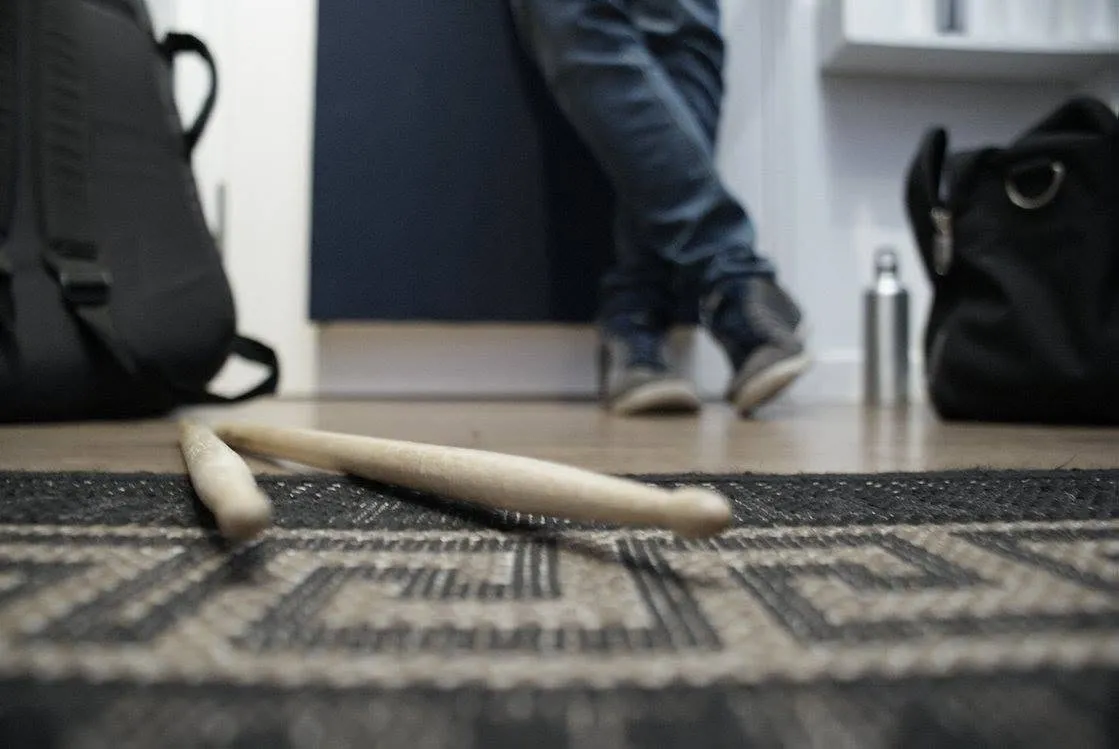
The problem with practice is its inherent repetition: going over something you’ve already done time and again. That applies to every area of life, from household chores to the admin and maintenance of processes in the workplace.
As fatiguing as it can feel, the skills it builds become invaluable elsewhere: time management, work ethic and remaining open and curious about how you can improve.
Having a plan, with clear goals and the habit of showing up reliably to reach them, is more important than ever in a world where we can outsource our critical thinking to AI or automate away repetitive tasks.
For me, the real answer to practice fatigue has nearly always been other people.
“A job search is akin to practising alone.”
With a Little Help from My Friends – Lean on Your Network
A less obvious form of skill development comes from observation.
I’ve learnt a lot from watching those around me dedicate themselves to their craft, such as fellow musicians in bands I’ve played in or shared a stage with, and seeing how they approach specific problems: a verse that doesn’t quite fit with a chorus, or a technical fault during a live performance.
It’s what almost every onboarding flow is based on. Whether you’re a junior developer or a senior leader, having someone to learn from who can help you shape your craft is underrated.
Of course, translating those observed skills into something tangible also takes practice, but I think many people and businesses don’t emphasise the power of it enough. It’s why I’ve always pushed to create clearer development paths and opportunities for the teams I’ve led, encouraging individuals to take on new responsibilities, work with different teams or train in new skills.
The emotional intelligence you develop from being embedded in a group and working towards a shared outcome is greater than you might think. The ability to understand others, build positive working dynamics and ‘read the room’ is essential, particularly in leadership.
Gaining a new perspective and knowing that you “don’t know what you don’t know”, 1 is a fantastic way of keeping you honest. There is immense value in having a mentor, coach, or peer who’s willing to help you course-correct when you become blinded by your own lack of self-awareness.
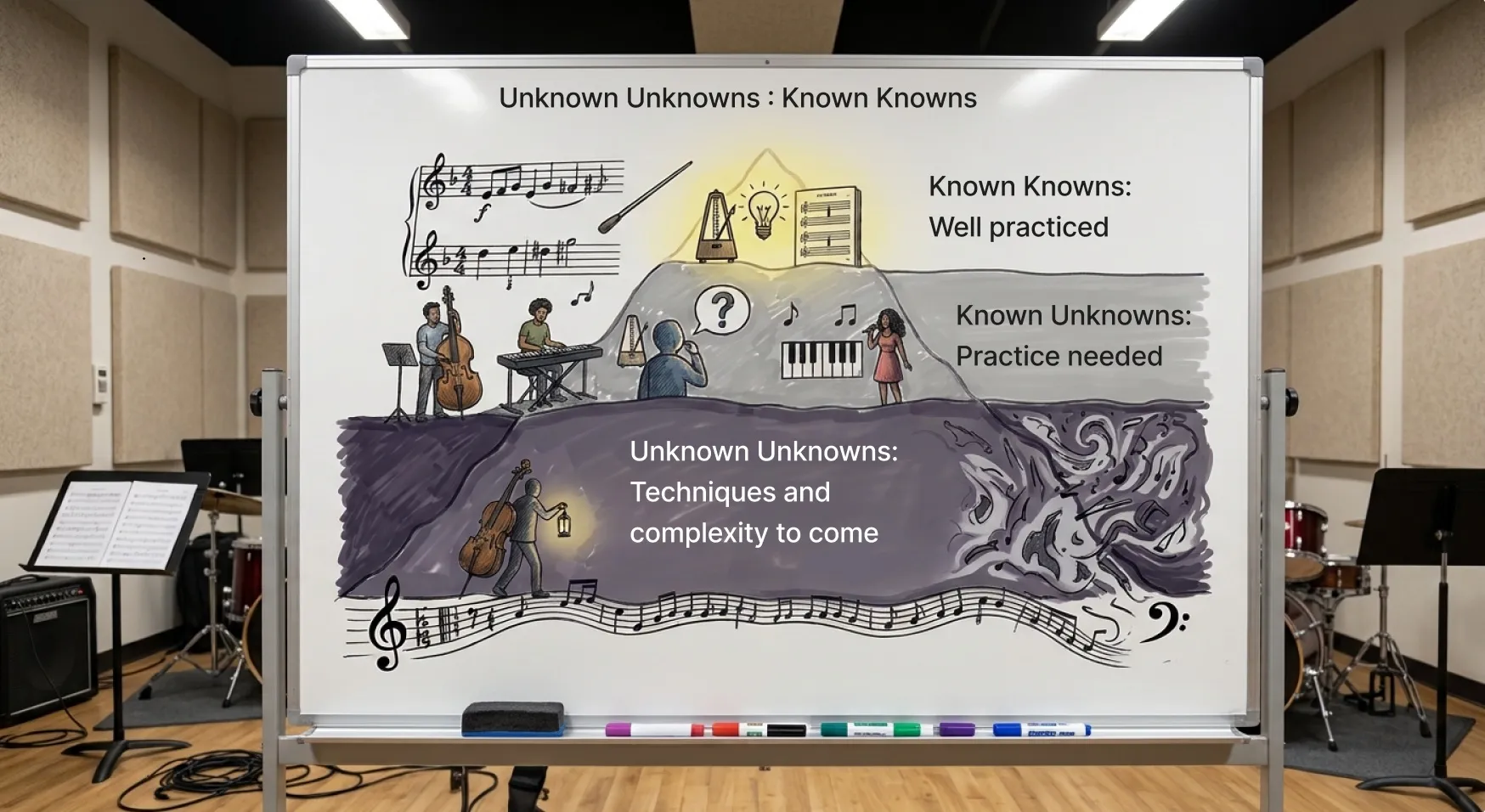
It’s something I’ve been reminded of since being made redundant. That sense of camaraderie is difficult to maintain because a job search is akin to practising alone.
“We all have days when those spirals of self-doubt take hold.”
We Can Work It Out – Learning and Iterating on Feedback
You can hone your CV and practise your personal stories and setbacks, but on your own you miss the real value that 1-on-1 or group feedback can offer.
In a band, it’s easy for someone to give you instant feedback. I once worked with a sound engineer who would never accept my first take. He would always insist I could play it better, even when I felt I’d done it well enough. He gave me clear insights into whether a kick drum was marginally out of time, or where I’d rushed a fill. It wasn’t until I’d repeated that section a few times that I genuinely heard the improvement on my original take.
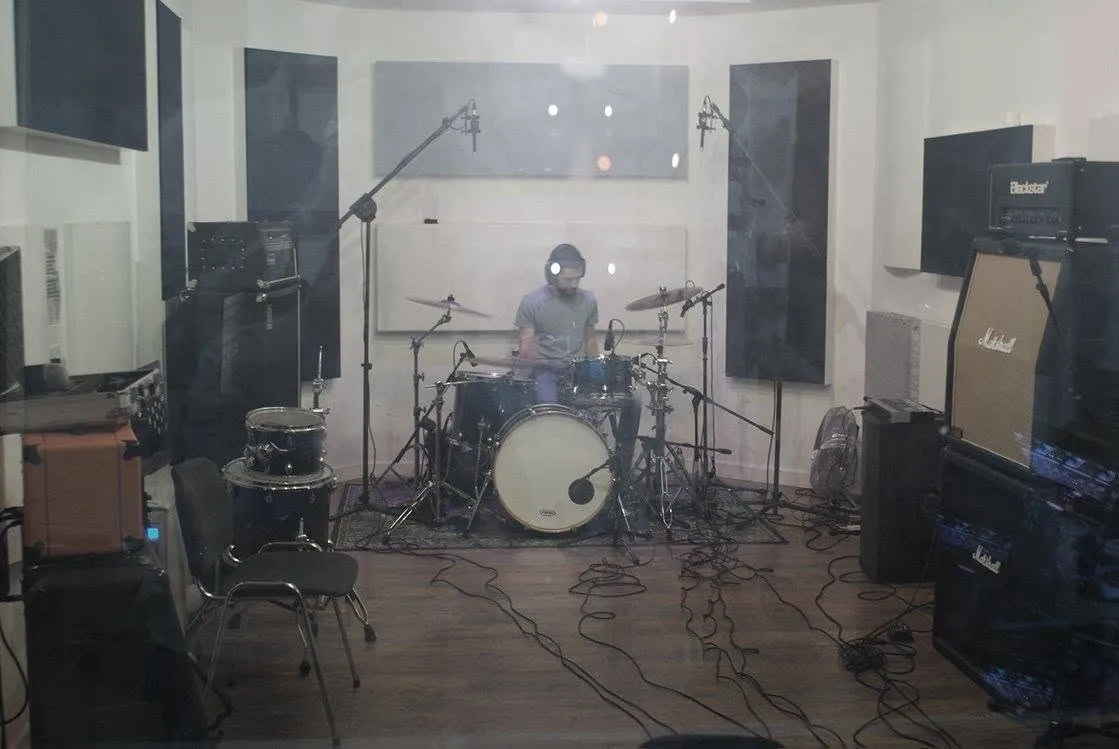
My annoyance at replaying the same section soon faded, and I came to appreciate his insights, as they made real improvements to my playing and to the song overall.
It’s much harder to get that level of feedback from solo practice, so make use of your network to close that gap.
Here’s the part that pulls all the other hard work together:
Being able to accept feedback in all its forms, truly assess how it fits with your own goals, and work out how to build it into the habits you’ve already established is where you really begin to see the compound benefits of practice.
Understanding where your weaknesses and blind spots might be helps you focus on those areas, while the (hopefully) good habits behind your strengths continue on autopilot.
Turning those weak spots into daily or weekly drills helps you build that muscle memory.
It’s also where quietening that dispiriting voice of imposter syndrome comes in.
Knowing what you need to work on, seeing real progress and turning it all into positive habits is the best way to reinforce your value to yourself.
It’s what I’ve found to be true most of the time, at least. Of course, we all have days when those spirals of self-doubt take hold, but sticking to the plan helps me fight back.
“I always feel better equipped using the habits I’ve built over years of practice.”
The End - A Curtain Call is Temporary
As I finished unloading my drum kit on that chilly morning, and the fog began to lift, I chose the only option that made sense at that moment: rest.
Sticking to the plan is important, and that includes knowing when to stop.
Most of the time, being kind to yourself and listening to your body is the best thing you can do when faced with a new, unknown challenge, whether that’s moving away from everything you’ve known, searching for new opportunities or attempting a career pivot.
I’m still fighting those same issues day to day, but I always feel better equipped using the habits I’ve built over years of practice.
I am currently listening to: unpeople: we are unpeople (opens in new tab)
Footnotes
-
Often attributed to Donald Rumsfeld and his “unknown unknowns” briefing, it’s a concept that is a recurring theme, almost as repetitive as practice. See also: Socrates and his belief that true wisdom is knowing you don’t know everything. With the opposite being the Dunning-Kruger effect (opens in new tab). ↩